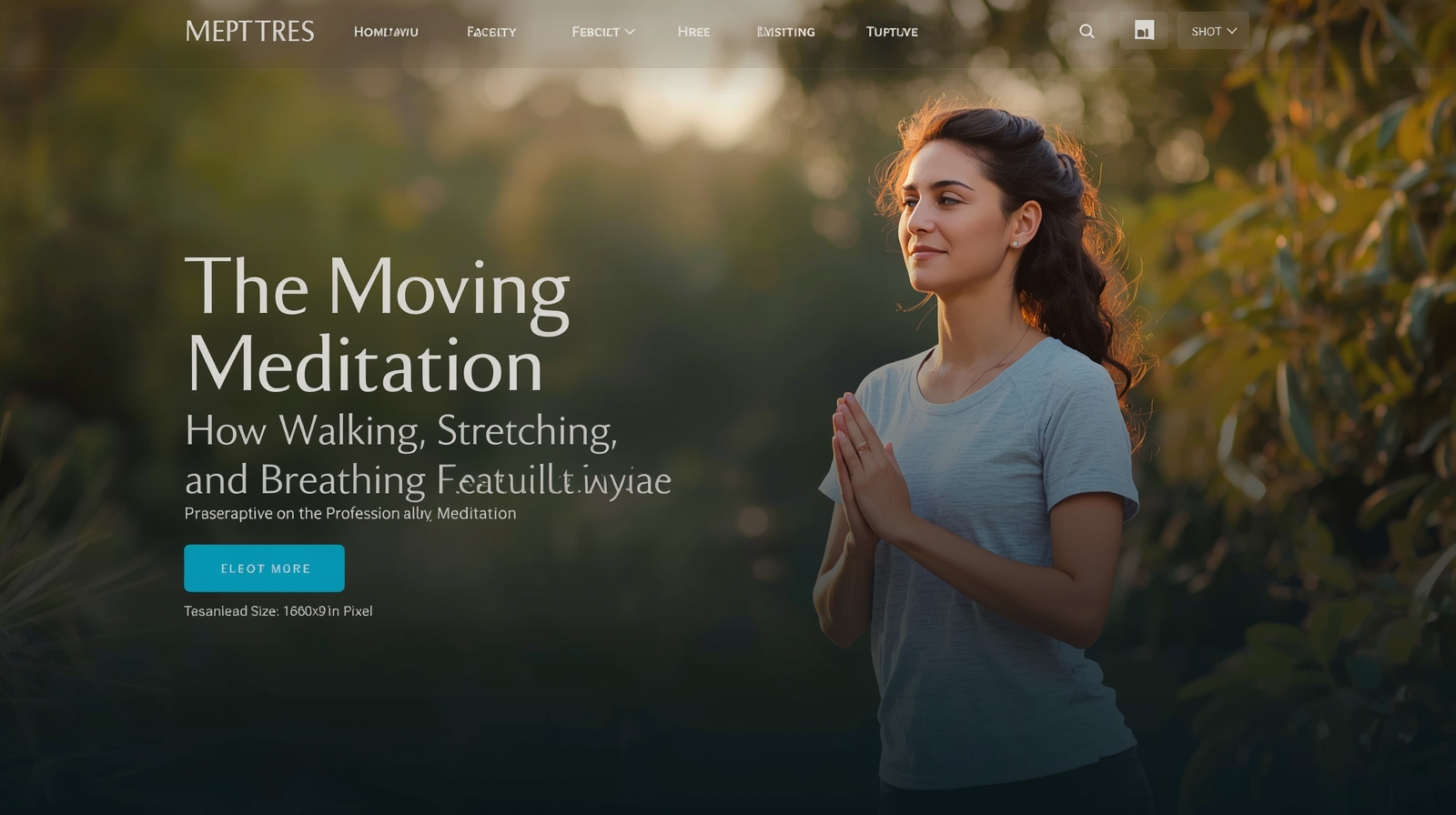
In today’s fast-paced world, it’s easy to move through life on autopilot. We rush from task to task, barely noticing the sensations of our bodies, the rhythm of our breath, or the little details of our environment. Yet, what if you could transform even the most mundane tasks into a source of calm, focus, and energy?
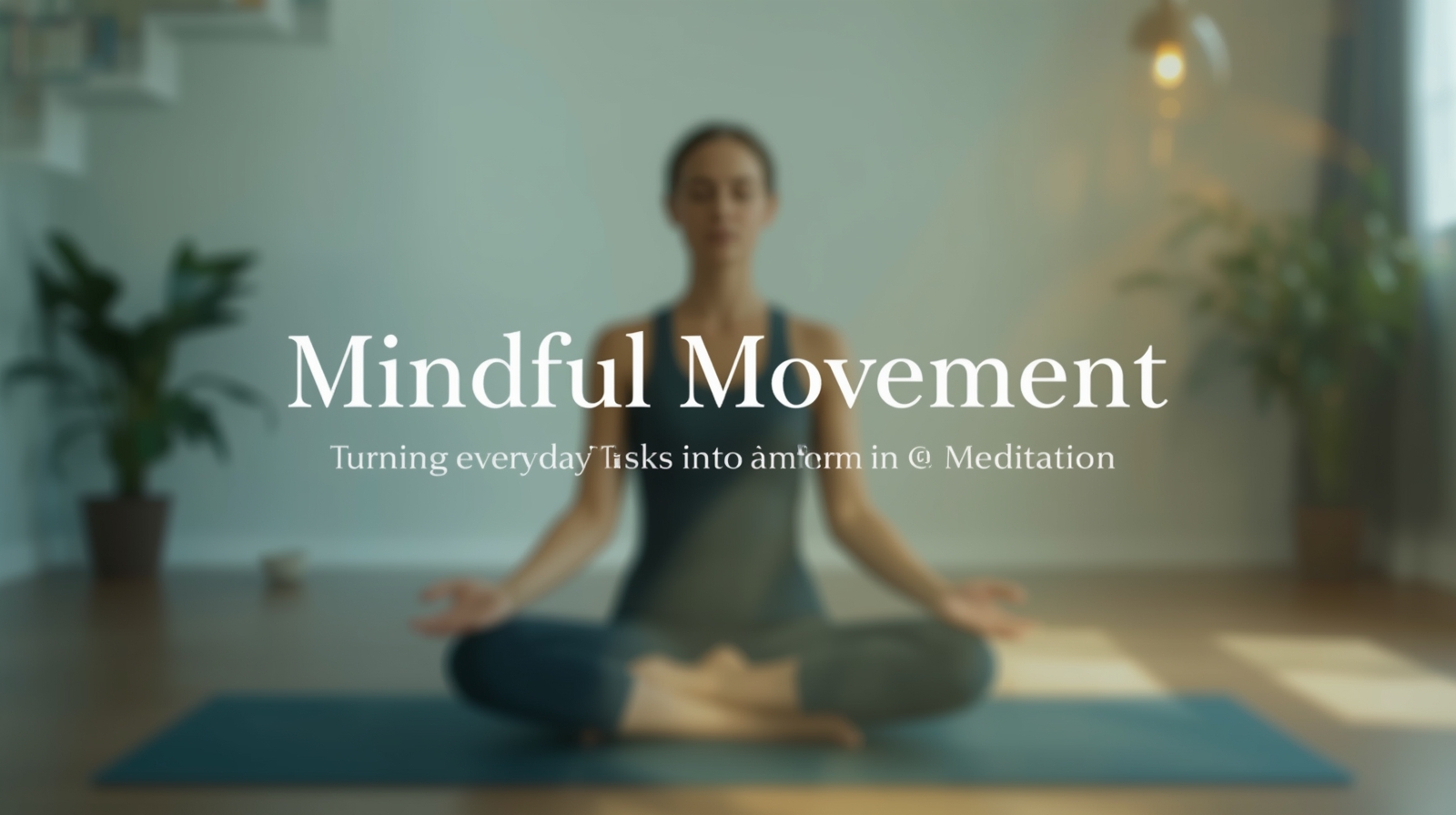
This is the essence of mindful movement — the practice of bringing awareness, intention, and presence to every motion, turning everyday tasks into living meditation. From washing dishes to walking to the office, mindful movement allows you to reclaim your attention, reduce stress, and connect with the present moment.
In this article, you’ll discover science-backed strategies, practical exercises, and lifestyle tips for integrating mindfulness into your daily motions — helping you create a life of calm, focus, and vitality.
🧠 The Science Behind Mindful Movement
Mindful movement is more than just slow or careful motion — it’s a neuroscientific tool that transforms how your brain processes stress, attention, and emotion.
- Activation of the parasympathetic nervous system: Focusing on movement triggers the body’s relaxation response, reducing cortisol and heart rate.
- Neuroplasticity and attention: Paying close attention to motions strengthens neural pathways associated with focus, cognitive control, and emotional regulation.
- Dopamine regulation: Mindful practice provides small rewards as you notice progress and mastery, reinforcing motivation.
Studies from Harvard Medical School and NIH indicate that even brief mindful exercises can significantly reduce stress, improve attention, and boost mood.
🌅 The Principles of Mindful Movement
To practice mindful movement effectively, it helps to understand its core principles:
1. Presence
Bring full attention to your body and the sensations of each motion. Notice the weight, the stretch, the pressure of your steps, or the motion of your hands.
2. Intention
Move with purpose, not just habit. For example, instead of mindlessly folding laundry, observe each fold, feel the texture, and acknowledge the order you’re creating.
3. Breath Awareness
Synchronize your breath with your movement. Inhaling and exhaling with intention enhances focus and anchors you in the present.
4. Non-Judgment
Notice your thoughts and sensations without criticism. If your mind wanders, gently return to the motion itself.
🏃 Mindful Walking: Turning Steps Into Meditation
Walking is one of the easiest daily activities to convert into mindfulness practice.
How to Practice:
- Stand tall, feet grounded.
- Feel each step — heel, ball, and toe.
- Coordinate breath with your steps (inhale for three steps, exhale for three steps).
- Observe your surroundings without labeling or judging.
Research from Stanford University shows that mindful walking reduces stress markers and improves mood and cognitive performance within 10–20 minutes.
🧹 Mindful Chores: Transforming Routine Tasks
Even chores like washing dishes, folding clothes, or cooking can become meditative.
- Engage your senses: Notice textures, colors, smells, and sounds.
- Focus on one task at a time: Avoid multitasking.
- Breathe with the motion: Each scrub, fold, or stir becomes a rhythm synchronized with breath.
Over time, these small practices build habitual mindfulness, making calmness a natural part of daily life.
🧘 Mindful Exercise: Moving With Awareness
Exercise becomes far more restorative when paired with mindfulness.
- Yoga, tai chi, or Qigong are inherently mindful, but even strength training or cardio can be mindful.
- Focus on muscle engagement, breathing, and posture.
- Avoid distractions like phones or music that break attention.
Studies show that combining mindfulness with physical activity enhances neuroplasticity, reduces anxiety, and increases overall satisfaction with exercise routines.
🌀 Mindful Commuting: Making the Journey Meditative
Commuting is often stressful, but mindful movement can transform travel into meditation.
- Notice your posture, grip, and breathing while driving.
- Observe passing scenery without judgment.
- If walking or cycling, synchronize breath with pace.
Research from the University of California demonstrates that mindful commuting reduces stress hormones and improves emotional regulation throughout the day.
🔋 Mindful Micro-Moments: The Power of Tiny Practices
Even brief moments can be used for mindful movement:
- Stretch at your desk: Pay attention to the sensations in your neck, shoulders, and back.
- Mindful hand movements: Stir coffee or water with focus, noticing the motion fully.
- Breathing with motion: Lift arms, bend, or rotate your torso while coordinating breath.
These micro-practices accumulate, creating long-term benefits for energy, focus, and stress resilience.
🧩 Integrating Mindful Movement Into Work
Many professionals feel drained due to sedentary routines. Mindful movement can be incorporated easily:
- Stand and stretch every hour.
- Walk while making phone calls.
- Use deep breathing combined with shoulder rolls.
- Observe posture and micro-movements while sitting.
These strategies not only restore energy and focus but also improve productivity and creativity.
🌟 Mindful Eating: Connecting Movement With Consumption
Eating is another routine that benefits from mindfulness:
- Chew slowly and notice textures and flavors.
- Use utensils as anchors for attention.
- Avoid multitasking while eating.
Mindful eating reduces stress, improves digestion, and strengthens the mind-body connection, according to Harvard Health Publishing.
🏞️ Mindful Nature Movement
Combining movement and nature enhances the meditative experience:
- Take mindful hikes, noticing each step, smell, and sound.
- Sit under trees and gently stretch or breathe with awareness.
- Engage all senses with gentle movement and presence.
Nature + mindful motion creates calm, replenishes energy, and improves cognitive flexibility.
🧘 Advanced Techniques for Mindful Motion
- Body Scan While Moving: Focus on each part of your body sequentially as you walk, stretch, or perform tasks.
- Movement Visualization: Imagine energy flowing through your body with each motion.
- Rhythmic Synchronization: Pair movements with music or breath in a slow, repetitive pattern.
These techniques deepen mindfulness, improve coordination, and reduce stress.
💡 Mindset Shifts for Mindful Movement
- From Doing to Being: Shift focus from completing tasks to fully experiencing them.
- Acceptance: Embrace imperfect movements as part of practice.
- Gratitude: Appreciate the ability to move and engage with life.
Research from UC Berkeley shows that mindful mindset shifts reduce anxiety, increase emotional resilience, and improve overall life satisfaction.
⚡ Scientific Benefits of Mindful Movement
| Benefit | Evidence |
|---|---|
| Reduced stress | Harvard Medical School, 2021 |
| Increased focus | Stanford University, 2020 |
| Improved mood | NIH Neuroplasticity Studies, 2019 |
| Better body awareness | Journal of Behavioral Medicine, 2020 |
| Enhanced creativity | Psychology Today, 2021 |
🌅 Creating a Mindful Movement Routine
- Morning Ritual: Gentle stretching + mindful breathing (5–10 minutes)
- Commute Mindfulness: Walking or driving with full attention
- Work Integration: Desk stretches, movement breaks, and mindful posture
- Evening Wind-Down: Light yoga or mindful cleaning activities
Consistency is key. Start small, and gradually integrate these moments into daily life.
🌀 Overcoming Barriers
Common obstacles:
- Distraction by technology
- Feeling “too busy”
- Impatience with the practice
Solutions:
- Schedule micro-mindfulness sessions.
- Remove phone distractions during short exercises.
- Celebrate small successes and notice cumulative benefits.
🌟 Real-Life Examples
- Jane, 32, Software Engineer: Uses mindful walking during lunch breaks. She reports improved focus, reduced stress, and enhanced creativity.
- Mark, 45, Entrepreneur: Practices mindful stretching and breathing every hour. He noticed greater energy and emotional regulation throughout his workday.
- Lisa, 28, Teacher: Converts dishwashing and folding laundry into meditative practices, feeling more grounded and present with family.
These examples highlight how accessible and transformative mindful movement can be.
🧘♀️ Conclusion: Moving Meditation in Everyday Life
Mindful movement is more than a practice — it’s a philosophy. By engaging fully with each motion, we turn mundane routines into opportunities for meditation, focus, and energy restoration.
From walking, chores, and commuting to exercise and eating, every action can become an intentional act of presence. Over time, these small moments accumulate, cultivating calm, clarity, and resilience.
Remember: life is not just about doing — it’s about moving mindfully through each moment. Start small, stay consistent, and watch everyday tasks transform into meditative motion that energizes your body, mind, and spirit.
🧾 References
- Csikszentmihalyi, M. Flow: The Psychology of Optimal Experience, 2008
- Harvard Medical School, Mindfulness and Stress Reduction, 2021
- Stanford University, Mindful Movement and Attention, 2020
- NIH, Neuroplasticity and Mindfulness, 2019
- Psychology Today, The Benefits of Mindful Motion, 2021
- Journal of Behavioral Medicine,