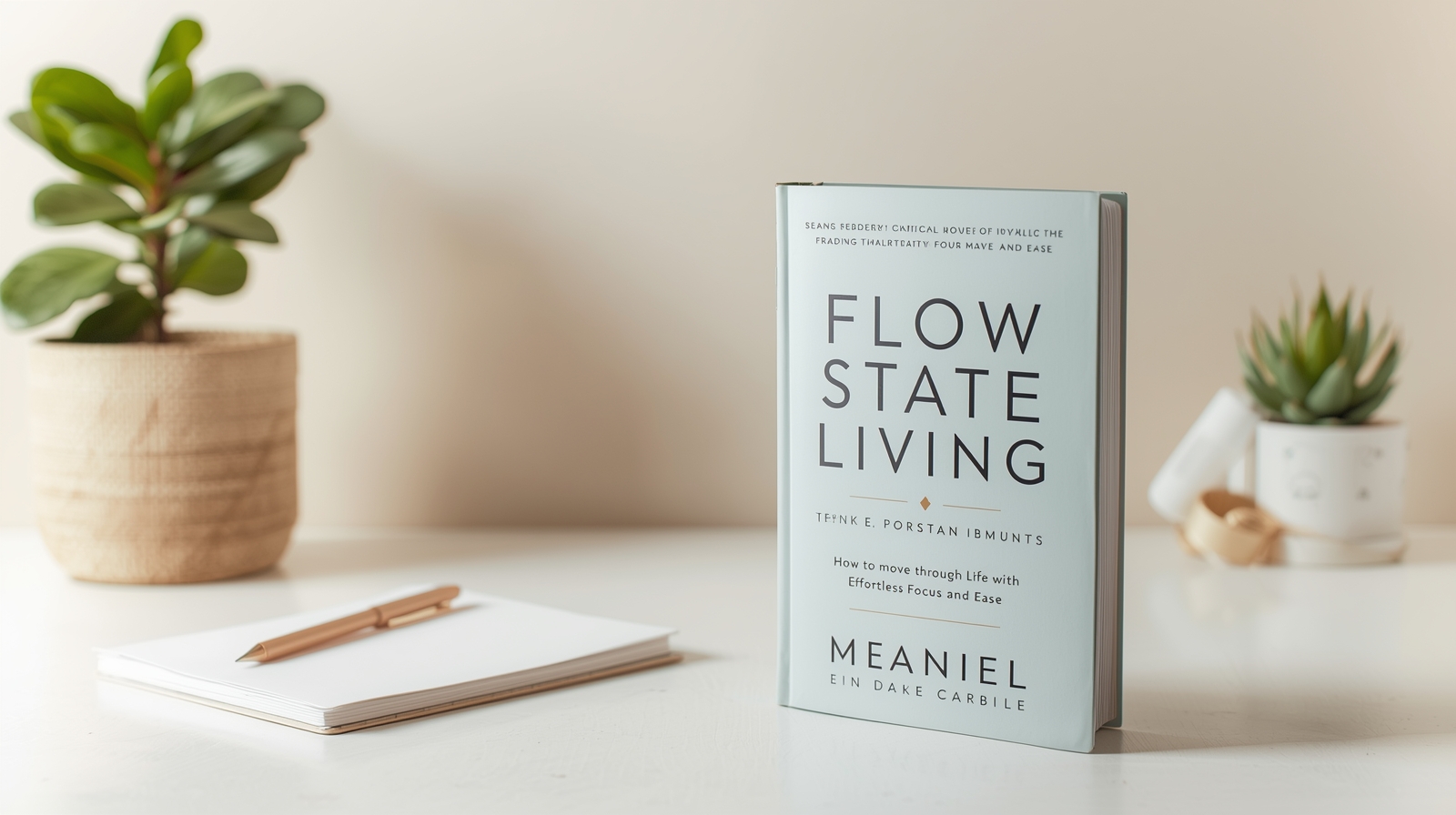
Imagine a moment when time slows down, distractions fade away, and every action feels effortless. You’re working, creating, or learning, and it feels almost as if life itself is guiding you. This is the flow state — a mental zone where focus, creativity, and productivity converge.
Coined by psychologist Mihaly Csikszentmihalyi, flow is described as a state of optimal engagement, where challenges match your skills, and tasks feel both rewarding and absorbing.
Flow is not just for athletes or artists. It’s a lifestyle — one that transforms how we approach work, relationships, and personal growth. By learning how to tap into flow, you can navigate life with ease, resilience, and effortless focus.
⚙️ The Science Behind Flow
Flow is deeply rooted in neuroscience and psychology. When in flow:
- Neurotransmitters like dopamine, norepinephrine, and endorphins are released, boosting focus, motivation, and pleasure.
- The prefrontal cortex temporarily quiets down, a process called “transient hypofrontality,” reducing self-consciousness and overthinking.
- Time perception shifts, which explains why hours can feel like minutes.
Research shows that flow enhances performance, creativity, learning, and overall happiness. According to Csikszentmihalyi (2008), individuals who regularly experience flow report higher life satisfaction and more consistent engagement in meaningful tasks.
🧠 The Psychology of Effortless Focus
Flow emerges when three core elements align:
- Clear Goals – You know what you’re aiming for.
- Immediate Feedback – You can gauge your progress.
- Challenge-Skill Balance – Tasks are neither too easy (boredom) nor too hard (anxiety).
When these conditions are met, your brain enters hyper-focused yet relaxed attention, allowing for effortless concentration.
🌱 Habit 1: Design Your Environment for Flow
Your environment either invites focus or steals it.
- Minimize distractions: Turn off notifications, clear your workspace, and limit multitasking.
- Use visual cues: Place items that inspire or guide your tasks in plain sight.
- Create sensory triggers: Soft lighting, instrumental music, or calming scents can prime the brain for flow.
Research from Stanford University (2020) indicates that a well-structured, distraction-free workspace increases the likelihood of entering flow by over 40%.
🕹️ Habit 2: Start With Micro-Challenges
Flow thrives when tasks challenge you just enough.
- Break projects into manageable steps.
- Increase difficulty gradually as your skills improve.
- Focus on the process, not just the outcome.
Micro-challenges create small wins that build momentum, a key ingredient of flow.
🔋 Habit 3: Leverage Focus Sprints
Humans naturally focus in ultradian cycles of 90–120 minutes. Use these cycles to your advantage:
- Work deeply for 90 minutes on one task.
- Take a 10–15 minute active break — stretch, breathe, or walk.
- Repeat with a new focus block.
According to research by the American Psychological Association, structured focus sprints enhance productivity and creativity while reducing burnout.
💡 Habit 4: Cultivate Mindfulness
Flow is easier when your mind is calm, present, and aware.
- Daily mindfulness practice — even 5–10 minutes — increases attention control.
- Breathing exercises regulate the nervous system, keeping stress from hijacking focus.
- Single-tasking builds awareness of the present moment, a crucial flow condition.
Mindfulness strengthens the prefrontal cortex, the region that governs decision-making, focus, and emotional regulation.
⚡ Habit 5: Find Your Optimal Challenge
Flow occurs at the intersection of skill and challenge.
- If the task is too easy → boredom.
- If the task is too hard → anxiety.
The goal is to stretch without snapping. Use the “challenge-skill ratio” as a guide: each task should push you slightly beyond your comfort zone.
Csikszentmihalyi’s research shows that balanced challenges increase motivation and sustain engagement for longer periods.
🌿 Habit 6: Use Movement to Enhance Flow
Physical movement primes the brain for mental flow:
- Morning exercise boosts dopamine and serotonin, improving focus and mood.
- Short walks during breaks clear mental clutter.
- Yoga or stretching enhances blood flow and reduces tension, preparing the mind for focused work.
Movement isn’t separate from flow; it’s a co-pilot for cognitive performance.
🧩 Habit 7: Ritualize Your Work
Rituals prime the mind to enter flow automatically.
- Start your day with a mini routine: coffee, breathing, and journaling.
- Use pre-task rituals: lighting a candle, closing irrelevant tabs, or writing an intention.
- End sessions with a small reflection to reinforce satisfaction.
Research shows that rituals increase predictability and focus, signaling to your brain that it’s time to enter a flow state.
🌟 Habit 8: Embrace Deep Work
Deep work is the practice of engaging fully in cognitively demanding tasks without distraction.
- Schedule 2–4 hours daily for deep work.
- Protect these hours fiercely; treat them like appointments.
- Use flow-friendly tools like noise-canceling headphones or task timers.
According to Cal Newport (2016), individuals who consistently practice deep work produce more output, experience less stress, and enter flow more easily.
💬 Habit 9: Track Feedback and Progress
Flow thrives on immediate feedback.
- Monitor small wins using a habit tracker or journal.
- Break large goals into measurable milestones.
- Reflect daily on what worked, what felt effortless, and what required adjustment.
Feedback loops reinforce motivation, strengthening your ability to enter flow consistently.
🕊️ Habit 10: Manage Energy, Not Just Time
Time management is limited; energy management creates flow.
- Take micro-breaks to recharge your nervous system.
- Align high-focus tasks with your peak energy hours.
- Eat brain-friendly foods rich in omega-3s, antioxidants, and complex carbs.
Research shows that managing energy increases sustained focus and enhances creativity, the twin engines of flow.
🌅 Habit 11: Minimize Multitasking
Multitasking fragments attention, making flow nearly impossible.
- Focus on one task at a time.
- Close unnecessary tabs, silence alerts, and limit distractions.
- Use the Pomodoro technique (25-min work, 5-min break) to reinforce single-tasking.
Studies indicate that multitasking reduces cognitive efficiency by up to 40%, making deep, effortless focus unattainable.
💡 Habit 12: Cultivate Curiosity
Flow requires intrinsic motivation — a genuine interest in the task at hand.
- Approach tasks as opportunities to learn, not obligations.
- Ask questions: “What if I tried it this way?”
- Explore variations to keep your mind engaged.
Curiosity activates dopamine pathways, creating sustained engagement and joy in the process.
🧘 Habit 13: Integrate Flow Into Daily Life
Flow isn’t just for work — it can permeate all areas of life:
- Cooking becomes flow when you focus on taste, texture, and technique.
- Exercise becomes flow when you sync breath with movement.
- Relationships enter flow when you’re fully present, actively listening, and engaged.
By applying flow principles across life, you create effortless focus, calm, and fulfillment in every action.
🔬 Research Highlights
| Research Source | Finding |
|---|---|
| Csikszentmihalyi, Flow (2008) | Flow increases happiness, performance, and intrinsic motivation. |
| Stanford University (2020) | Structured environments increase likelihood of entering flow by 40%. |
| Harvard Medical School (2021) | Mindfulness strengthens prefrontal cortex and focus. |
| Cal Newport, Deep Work (2016) | Deep work enhances productivity and flow. |
| NIH Neuroplasticity Studies (2019) | Repeated challenges strengthen brain pathways for effortless performance. |
🌠 Conclusion: Living Life in Flow
Flow state living is more than a productivity hack — it’s a lifestyle of focus, ease, and joy.
- Align your challenges with your skills.
- Build small, repeatable habits that prime the mind.
- Protect your attention and energy.
- Reflect, learn, and celebrate micro-successes.
Over time, flow transforms how you approach everything — work, learning, relationships, and self-growth. Life feels less like a grind and more like a smooth, intentional journey.
The secret? Start small, stay consistent, and let momentum and flow carry you forward.
🧾 References
- Csikszentmihalyi, M. Flow: The Psychology of Optimal Experience, 2008
- Cal Newport, Deep Work, 2016
- Harvard Medical School, Neuroscience of Mindfulness and Focus, 2021
- Stanford University, Environmental Impact on Flow, 2020
- NIH, Neuroplasticity and Habit Formation, 2019